
If your furnace keeps turning on and off frequently, the problem goes well beyond inconvenience. This behavior, known as short cycling, means the heating system starts and stops before completing a full heating cycle. For homeowners in North Las Vegas, NV, where winter nights can drop uncomfortably low and heating systems are expected to perform reliably after sitting dormant through a long summer, short cycling leads to uneven heating, rising utility bills, and unnecessary wear on components that are expensive to replace. Understanding what causes it, and when it warrants professional service, is the most direct path to resolving it.
Homeowners throughout North Las Vegas, NV, who invest in furnace and HVAC repair at the first sign of short cycling consistently avoid the compressor and motor damage that can turn a straightforward repair into a much larger one.
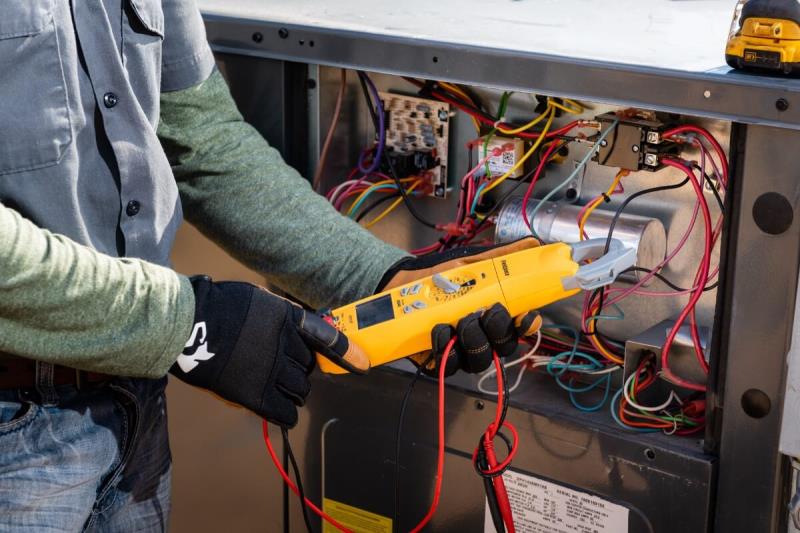
1. Thermostat Problems
The thermostat is the furnace’s primary control interface. When it malfunctions or misreads indoor temperatures, it sends inaccurate signals to the heating system, causing it to cycle on and off based on conditions that do not reflect the home’s actual state.
Signs that point to a thermostat-related cause include:
- The furnace turns off within a few minutes of starting, before the home has warmed meaningfully
- The temperature displayed on the thermostat does not match how the home actually feels
- The system behaves inconsistently, ignoring thermostat adjustments or responding unpredictably
The underlying cause is often straightforward: dead batteries, accumulated dust on internal sensors, incorrect placement near drafts or direct sunlight, or deteriorating wiring that creates intermittent faults. Any of these conditions can cause the thermostat to signal the furnace that the target temperature has been reached when it has not, triggering a premature shutdown.
A malfunctioning thermostat causes the furnace to operate inefficiently, creates temperature swings throughout the home, and places ongoing stress on the blower motor through repeated startup and shutdown cycles. If the thermostat is the suspected cause and basic steps have not resolved the issue, professional recalibration or replacement is the appropriate next step.
2. Clogged or Dirty Air Filters
A dirty air filter is one of the most common contributors to furnace short cycling. In North Las Vegas, NV, where desert dust, caliche, and fine sand accumulate quickly, filters reach their service limit faster than in most other climates.
When a filter becomes saturated with debris, airflow through the system is severely restricted. The furnace cannot move adequate air across the heat exchanger, internal temperatures rise, and the high-limit safety switch triggers a shutdown to prevent damage. Once the unit cools down, it restarts, and the cycle repeats.
The pattern produces several recognizable signs:
- Weak or reduced airflow from supply registers
- The furnace shuts off shortly after starting, without the home reaching the thermostat setting
- Dust accumulation on registers and surrounding surfaces is increasing more rapidly than usual
Beyond short cycling, a clogged filter degrades indoor air quality and increases wear on the blower motor, which must work harder to move air through the restriction. If filter replacement does not resolve the short cycling, the issue may involve dirty blower components or duct restrictions that require professional inspection to locate and clear.
3. Airflow Restrictions or Blocked Vents
Even with a clean filter in place, airflow problems elsewhere in the system can trigger the same overheating-and-shutdown pattern. Blocked supply or return vents, collapsed duct sections, or debris accumulation inside the ductwork all reduce the volume of air the furnace can circulate, creating conditions that cause the high-limit switch to activate.
In North Las Vegas, NV homes, airflow restrictions frequently develop from furniture or storage items repositioned over vents, vents closed in rooms not regularly used, or ductwork that has separated at joints in attic spaces exposed to extreme temperature swings.
The effect on the home is measurable:
- Uneven heating, with some rooms remaining cold while others reach the desired temperature
- Certain vents produce little or no airflow
- The furnace cycling off before the thermostat’s target is reached
Closing vents in unused rooms is a common source of this problem. Unlike older systems designed with fixed pressure assumptions, modern HVAC systems are calibrated for all registers to be open, and closing vents disrupts the pressure balance, restricting system-wide airflow. Consistent professional furnace maintenance includes duct and airflow assessment as part of the service visit, catching restrictions before they drive short cycling or component stress.
4. Overheating Furnace Components
A furnace that overheats is designed to protect itself by shutting down. The high-limit switch is a safety control that triggers when internal temperatures exceed a safe threshold, preventing damage to the heat exchanger and reducing the risk of a dangerous condition developing. When this happens occasionally, it is the system working as designed. When it happens repeatedly, it indicates an underlying problem causing the system to overheat.
Common causes of chronic overheating include:
- Dust and debris accumulation inside the system that insulates components and prevents adequate heat dissipation
- A failing blower motor that cannot move sufficient air across the heat exchanger
- Dirty burners that are not combusting fuel cleanly, increasing the thermal load on internal components
- A compromised heat exchanger, which represents the most serious scenario, as it can allow combustion gases to enter the airstream
A burning odor from the vents or unusually hot air at the registers is a sign that overheating may be causing short cycling. If these symptoms are present, powering the system off and calling for professional service is the appropriate response. A cracked heat exchanger is a carbon monoxide risk that requires immediate attention.
Professional furnace repair addresses these conditions with the diagnostic tools and safety expertise the situation requires, including testing the limit switch, assessing the burner, and inspecting the heat exchanger.
5. Furnace Size or Installation Issues
When a furnace short-cycles from the day of installation, or has done so for as long as the current homeowner can remember, the cause may be with the equipment sizing or the original installation rather than a component failure.
An oversized furnace heats the space too quickly, satisfying the thermostat before warm air has been distributed throughout the home. The system shuts off, the temperature drops rapidly, and it restarts. This rapid on-off pattern prevents adequate humidity control, creates uncomfortable temperature swings, and places repeated startup stress on the compressor and motor.
Indicators that sizing or installation may be the root cause include:
- The furnace runs for only a few minutes at a time, regardless of the thermostat setting
- Some areas of the home warm quickly, while others remain noticeably cooler
- Short cycling has been consistent since the equipment was installed, with no clear deterioration suggesting a developing mechanical issue.
A load calculation performed by a qualified technician evaluates the home’s square footage, insulation, window area, and other factors to determine the correctly sized unit. If the existing system is found to be oversized, options range from system adjustment and zoning solutions to replacement with appropriately sized equipment.
Why Timely Repairs Matter
Furnace short cycling places stress on the system with every startup cycle. Motors, switches, sensors, and the compressor all experience wear at startup that they do not experience during steady operation, and the more frequently the cycle repeats, the faster that wear accumulates. Addressing the underlying cause early is consistently less expensive than waiting until component failure makes the repair scope larger.
For North Las Vegas, NV homeowners, resolving short cycling before the coldest nights of the season also means the system is reliable when it is needed most. A professional AC tune-up in spring and a furnace inspection in fall creates a service rhythm that catches developing issues in both systems before they affect performance.
Century AC & Heating Repair approaches every furnace service call with the same diagnostic precision and honest communication that has defined our work across North Las Vegas, NV, since 1997.
No More Short Stops in North Las Vegas, NV
A furnace that has short cycles is not a problem to monitor and revisit. It is one to address, because the wear it produces is cumulative and the cost of inaction compounds over time. Century AC & Heating Repair has been serving homeowners in North Las Vegas, NV, for over 30 years. As a family-owned company, we bring genuine care and technical expertise to every heating service call, and we take satisfaction in resolving problems completely rather than temporarily. If your furnace has been cycling erratically or has not been professionally inspected recently, reach out to our team today to schedule a diagnostic visit before the issue worsens.