
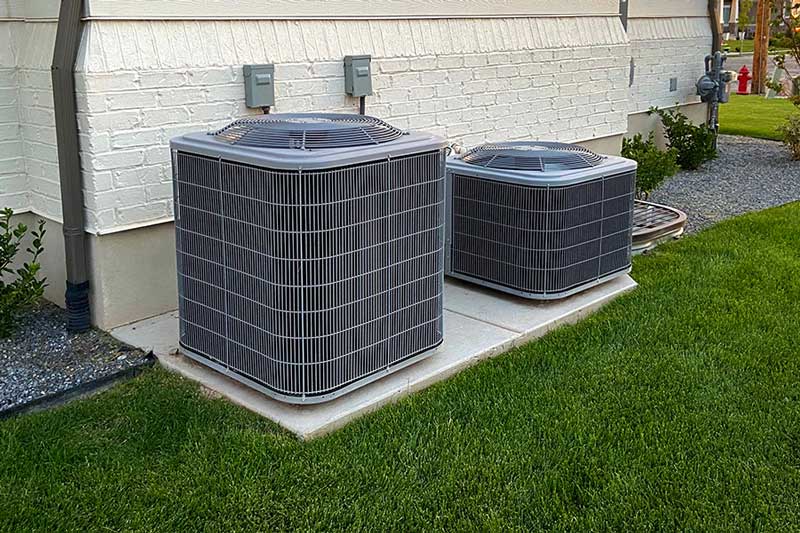
When it comes to your AC system in North Las Vegas, NV, certain warning signs should never be overlooked. In our service calls throughout the valley, from the quiet neighborhoods of Aliante to the busier corridors near Losee Road, we have seen firsthand how the extreme Mojave Desert heat can turn a minor mechanical issue into a complete system failure within hours. Understanding these signals is what separates a manageable repair from an afternoon spent in a 110-degree living room. Homeowners who schedule AC repair in North Las Vegas, NV, at the first sign of trouble consistently avoid the kind of mid-season emergencies that are far more disruptive and expensive than the original issue would have been.
Unusual Noises Coming From Your AC Unit
If your AC unit has started making sounds it did not make before, those sounds are almost never just a sign of age. They are mechanical signals, and in North Las Vegas, NV, where systems run under sustained heavy load from late spring through early fall, ignoring them can accelerate a minor problem into a costly failure.
Common sounds and what they typically indicate include:
- Rattling: Loose internal components, a failing fan blade, or debris that has entered the unit, particularly common after one of Southern Nevada’s dust storms moves through the valley
- High-pitched whine or squeal: Elevated internal pressure, a failing compressor motor, or a refrigerant issue that is placing strain on the system
- Banging: Fan obstruction from debris, or a failed motor mount that is allowing the assembly to shift during operation
- Hissing: Refrigerant escaping through a crack or loose fitting in the line set, which reduces cooling capacity and places stress on the compressor
Each of these sounds warrants a professional evaluation before the system is run further. Continued operation under these conditions risks secondary damage to components that are far more expensive to replace than the original source of the noise. Professional AC repair provides the precise diagnostics needed to identify the root cause and resolve it before the unit seizes entirely.
Inconsistent Cooling Throughout Your Home
Inconsistent cooling is one of the more common complaints we encounter in North Las Vegas, NV homes, and it is also one of the more misunderstood. When certain rooms are noticeably warmer than others, or when the system runs continuously without the home reaching a comfortable temperature, the instinct is often to lower the thermostat setting. That adjustment does not address the underlying issue and adds additional runtime strain to a system that is already struggling.
Uneven performance typically traces to one or more of the following:
- Duct leaks or disconnections that allow conditioned air to escape into unconditioned spaces before it reaches the living area
- Thermostat calibration issues where the control system is not accurately reading or responding to the actual indoor temperature
- Low refrigerant charge from a slow leak, which reduces the system’s ability to transfer heat effectively across the entire home
- Airflow restrictions from dirty coils, clogged filters, or blocked registers that prevent adequate distribution
Ignoring inconsistent cooling leads to increased wear as the system works overtime to compensate for the imbalance. Routine AC maintenance identifies these issues early, before the workload compounds and drives a more serious failure.
Increased Energy Bills Without Explanation
A spike in energy costs without a corresponding change in usage habits is one of the most reliable early indicators that something is wrong with the AC system. When a unit is not operating at its designed efficiency, it spends more time in startup cycles or runs continuously to maintain the target temperature, consuming significantly more electricity.
In North Las Vegas, NV, where NV Energy rates climb during peak summer demand periods, and systems are already running at high capacity, the financial impact of an inefficient AC unit compounds quickly. Common efficiency-related causes include clogged evaporator or condenser coils that restrict heat transfer, aging capacitors that affect how reliably the compressor starts, and refrigerant leaks that force the system to run longer cycles to achieve the same output.
When utility bills have increased without explanation and usage habits have not changed, a professional inspection is the most direct way to identify the cause and restore the system to its intended operating efficiency.
Strange Odors Coming From the Vents
Odors from the vents are not normal operating behavior, and they should not be dismissed as dust burning off or the system warming up. Persistent or unusual smells indicate specific conditions inside the air handler or ductwork that deserve prompt attention.
- Musty or moldy odor: The most common source is biological growth within the air handler or ductwork, typically developing when condensation does not drain properly. During monsoonal humidity spikes in North Las Vegas, NV, late summer, moisture management inside the system becomes more critical, and drainage issues that would otherwise go unnoticed can create conditions for microbial growth.
- Burnt or electrical smell: This indicates that an electrical component is overheating or a motor is beginning to fail. This category of odor carries a safety risk beyond just air quality and warrants immediate professional evaluation.
- Chemical or sharp smell: May indicate refrigerant escaping near the air handler, which poses both health and equipment concerns.
Each of these odor types points to a different underlying issue. Professional diagnostics determine whether the solution is a drainage clearing, a component replacement, or a more thorough cleaning and filtration upgrade to restore healthy indoor air.
Frequent Cycling On and Off
Short cycling, where the system turns on and off repeatedly every few minutes rather than completing full, efficient cycles, is one of the more damaging operating patterns an AC unit can fall into. It is also a clear signal that something in the system is not functioning correctly.
Causes of short cycling in North Las Vegas, NV homes include:
- Iced-over evaporator coil from restricted airflow or low refrigerant, which causes the system to shut down on safety controls before completing a cycle
- Thermostat malfunction, where the control system is cycling the equipment based on inaccurate temperature readings
- Oversized equipment that heats or cools the space too quickly and satisfies the thermostat before full air distribution has occurred
- Electrical component failures, including failing capacitors or contactors that interrupt normal startup and shutdown sequences
The compressor bears the greatest cost of short cycling. Every startup draws significantly more electrical current than during steady-state operation, and the mechanical stress of repeated starts shortens the compressor’s lifespan considerably. A professional AC tune-up that includes electrical component testing is one of the most effective ways to catch the conditions that lead to short cycling before they cause compressor damage.
Century Air Keeps North Las Vegas, NV Running Cool
None of these warning signs resolves on its own, and in the North Las Vegas, NV summer heat, a system that is already showing stress has very little margin before a partial problem becomes a complete failure. Century AC & Heating Repair has been diagnosing and resolving AC issues across the Las Vegas Valley since 1997. As a family-owned company, we bring the same level of care, transparency, and technical precision to every service call, and we take genuine pride in restoring comfort to homes before a manageable repair turns into an emergency. If your system shows any of these signs, do not wait for a breakdown before taking action. Reach out to our team today to schedule a diagnostic visit while the issue is still straightforward to address.