



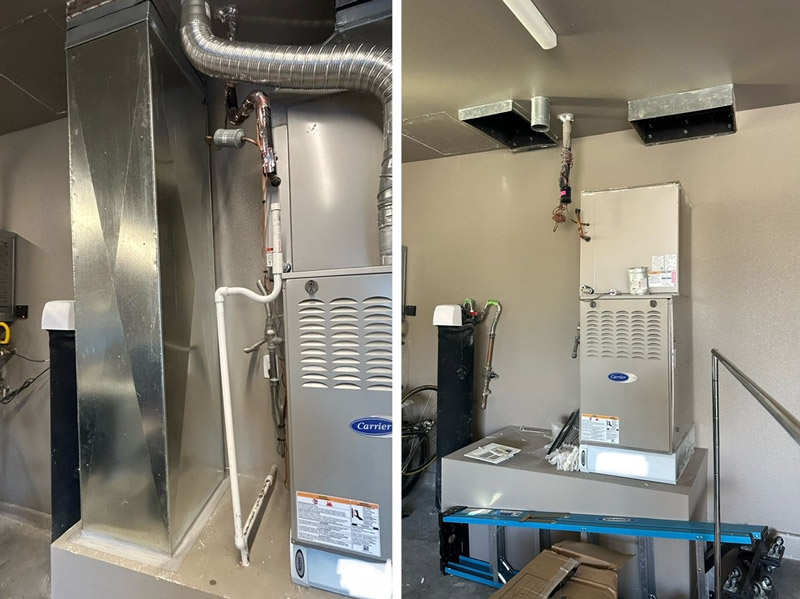
Newer home, newer furnace, no problems, right? Not always. Many homes on the north end of North Las Vegas were built more recently than older parts of Clark County, and while modern furnaces are efficient, they rely on sensors, circuit boards, and drain lines that can trip them up in ways older units never did.
Century AC & Heating Repair has kept Las Vegas area homes warm since 1997, and we work on everything from decades-old units to today’s high-efficiency systems. We’re family owned, honest about what we find, and available 24/7 when the heat goes out.

Modern furnaces often tell you what’s wrong, if you know where to look. Keep an eye out for these.
These may seem small, but they’re often the first sign of a part that’s about to fail, and an early visit keeps the fix simple.
High-efficiency furnaces pull so much heat from the exhaust that they create water, which drains away through a small line and trap. In the dry Clark County air, mineral residue and dust can build up in that drain, and once it backs up, a pressure switch shuts the whole system down. It’s one of the most common calls we get from newer neighborhoods.
Thermostats are another frequent source of trouble. Many Northridge homeowners have upgraded to smart thermostats, and if the wiring isn’t matched to the furnace, you can end up with short cycling, blank screens, or a system that won’t respond. Sometimes the fix is a single wire, not a new part.
Two-story layouts add their own challenge. Heat rises to the upstairs bedrooms while the main floor stays cool, and builder-installed ductwork isn’t always balanced for both. We check airflow on both levels so the whole house feels even.
Most newer furnaces store error codes, and that’s often where our technician starts. Reading the code points us toward the problem, but we never stop there. We confirm it with testing so you aren’t paying for a part you don’t need.
From there, we check ignition, the flame sensor, inducer motor, pressure switches, condensate drain, blower, and thermostat wiring. We also inspect the heat exchanger and test for carbon monoxide on every heating call, no matter how new the system is.
You’ll get a clear explanation and an upfront price before any work begins. When the repair is done, we run the furnace through a full cycle, clear any stored codes, and make sure it’s heating both floors properly.
Chris called us on a December evening after his furnace in Northridge shut down three times in an hour. The control board was flashing a code, and he could hear water gurgling somewhere inside the unit.
Our technician traced it to a clogged condensate trap that was letting water back up toward the pressure switch. He cleaned out the trap and drain line, checked the pressure switch and venting, and made sure the line was sloped correctly so it would drain freely.
The furnace ran steady from then on, and Chris’s house was warm again before the kids went to bed. He was glad to learn it was a cleaning job, not a major part failure.
Whether your system is two years old or twenty, here’s what you get when you call us.
We’ll treat you like a neighbor and keep your home comfortable for the long haul.
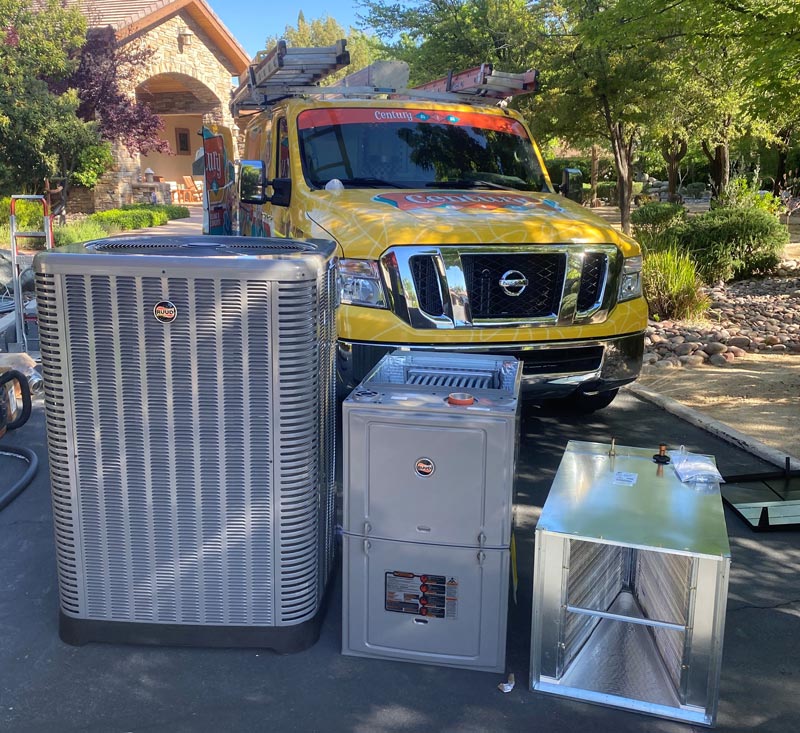
A clogged condensate drain, dirty flame sensor, or pressure switch issue are common causes in high-efficiency furnaces.
It’s a diagnostic code from the control board. Our technicians read it and confirm the cause with testing.
Yes, if it’s wired incorrectly or isn’t compatible with your system. We can check the wiring and setup.
Yes. Drains, sensors, and filters still need attention, and maintenance helps your system last.
Absolutely. We also check airflow between floors to help balance temperatures.