



Summerlin South’s foothill location along the base of the Spring Mountains gives it some of the coldest winter nights anywhere in the Las Vegas Valley, and that reality shapes furnace demand here more than in almost any other community we serve. Century AC & Heating Repair has worked throughout Summerlin South since 1997, and requests for furnace repair in Summerlin South, NV climb noticeably whenever a cold front settles in against the foothills.
Summerlin South is also known for its larger homes, many with two-story layouts, zoned HVAC systems, and multiple furnaces serving different parts of the house. That scale introduces complexity that smaller, single-furnace homes elsewhere in the valley simply don’t have, and it shapes how we approach nearly every repair call here.


Given the size and complexity of many Summerlin South homes, these are the warning signs worth paying attention to across zoned or multi-furnace systems.
In a home with multiple furnaces or zones, isolating which system or zone is actually affected is often the first step toward an accurate repair.
Summerlin South’s position along the Spring Mountains foothills means winter cold fronts hit harder and more directly here than in most of the valley. Wind coming off the mountains during a cold snap can drop perceived temperatures further still, putting real demand on furnace equipment that might handle a milder Las Vegas winter with ease elsewhere.
The community’s larger homes, many built during the late 1990s and 2000s with expansive square footage and high ceilings, often rely on zoned systems with multiple furnaces to manage heating across different areas. When one zone underperforms, the cause is frequently isolated to a single furnace, a specific damper, or a zone control board rather than the entire system.
Custom architecture in Summerlin South also tends to feature large windows and great rooms designed to showcase mountain and valley views. Those same design choices increase heat loss during cold snaps, meaning furnaces in these homes are often working against a larger thermal load than a comparably sized home with more conventional window placement.
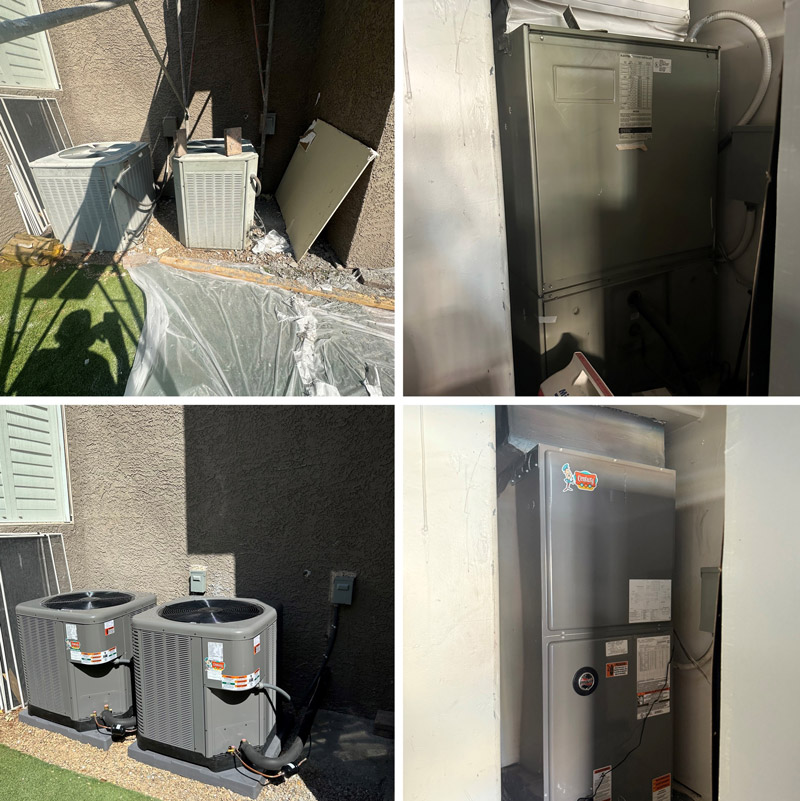

In a Summerlin South home with a zoned system, we start by identifying exactly which zone or furnace is causing the problem before doing anything else. Multiple furnaces and zone controls add complexity that requires a systematic approach rather than assuming the entire system is at fault.
Our technician inspects the affected furnace, the relevant zone dampers, and the control board managing the zoning system, along with standard ignition and heat exchanger checks. We also assess whether the issue is isolated or part of a broader system-wide pattern.
After diagnosis, we walk you through exactly what we found, including which component or zone is responsible. In larger, more complex homes, that clarity matters, since it helps you understand why a problem in one room doesn’t necessarily mean the whole system needs attention.
The Paseos is one of Summerlin South’s established neighborhoods, and last winter a homeowner named Karen called us because her home office, on its own dedicated zone, stayed cold no matter how high she set that zone’s thermostat, while the rest of the house heated normally.
Our technician traced the issue to a failed zone damper actuator that had stopped responding to the control board’s signals, leaving the damper stuck in a mostly closed position regardless of what the thermostat requested. The actuator was replaced, the zone was recalibrated, and Karen’s home office reached a comfortable temperature within the same visit for the first time in weeks.
She mentioned she’d assumed the whole furnace needed replacing since one area of the house simply wouldn’t warm up. Isolating the problem to a single zone component saved her from a much larger and unnecessary expense.

Summerlin South’s larger, more complex homes require a technician who understands zoned systems and multi-furnace setups, not just a standard single-system diagnostic. We’ve built that expertise over nearly 30 years serving this community.
Not usually. In zoned systems common throughout Summerlin South, a single zone failing to heat often points to a specific damper or zone control issue rather than a failure of the entire furnace. Isolating the actual cause typically leads to a much smaller repair.
Large windows and great rooms designed to showcase views can increase heat loss during cold weather, meaning your furnace may need to work harder to maintain comfort compared to a home with more conventional window placement. This is a design factor worth considering alongside furnace performance.
Summerlin South’s location along the base of the Spring Mountains puts it directly in the path of cold fronts and mountain wind, resulting in colder conditions than much of the rest of the Las Vegas valley during winter weather.
Yes. Zoned and multi-furnace systems are common in Summerlin South’s larger homes, and we have experience diagnosing and repairing these more complex setups, including isolating problems to a specific zone or unit.
Zone dampers can fail due to a worn actuator motor, electrical issues in the control wiring, or mechanical wear over years of operation. When a damper stops responding correctly, it can leave a zone stuck either too open or too closed regardless of thermostat settings.